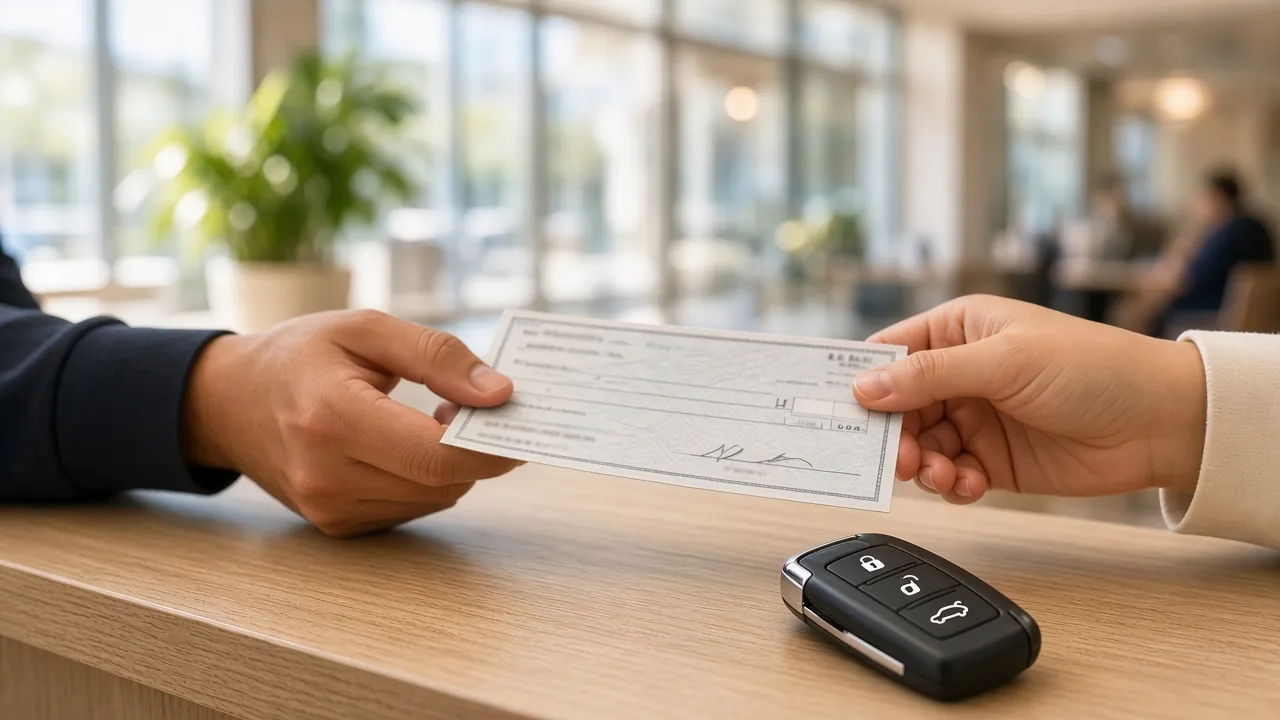
Getting paid safely in a private car sale
Verify funds before you sign the title. Overpayment scams, counterfeit checks, and reversible payment-app transfers are common in private car deals.
Practical guidance — not a DMV rule
Scams to watch for
A buyer sends a check or transfer for more than the agreed price and asks you to wire or Zelle the difference to them or a "shipping agent." The payment later fails while your refund is gone.
Counterfeits can look legitimate. "Cleared" in your app does not mean the bank has finally paid — holds and reversals still happen.
Zelle, Venmo, PayPal, and similar services can be disputed or tied to stolen accounts. Treat large peer-to-peer transfers as higher risk than cash or a verified bank instrument.
Safer ways to verify funds
Cash at your bank. Meet at a branch, count bills together, and deposit before signing the title.
Cashier's check from the buyer's bank. Go inside the issuing bank with the buyer and watch the teller issue the check, or call the bank using a number you look up yourself (not a number on the check) to confirm it is valid.
Wire transfer. Confirm the full amount posted to your account with your banker before you release the car. Wires are hard to reverse once settled — still watch for fraud involving stolen sender accounts.
Never sign the title first. Complete payment verification, then sign the title and bill of sale together at the meeting.
Tie payment to DMV paperwork
Once paid, give the buyer a signed title, smog certificate when required, and a bill of sale. You still must file the Notice of Transfer within 5 calendar days (VC §5900) — that step helps protect you from later parking and toll liability; it does not transfer ownership.
Related reading
Reviewed on 2026-11-27
Answer a few questions about your car and situation. See a free preview of your personalized California selling plan. The full plan is $19.99 per vehicle.
Start the free questionnaire